
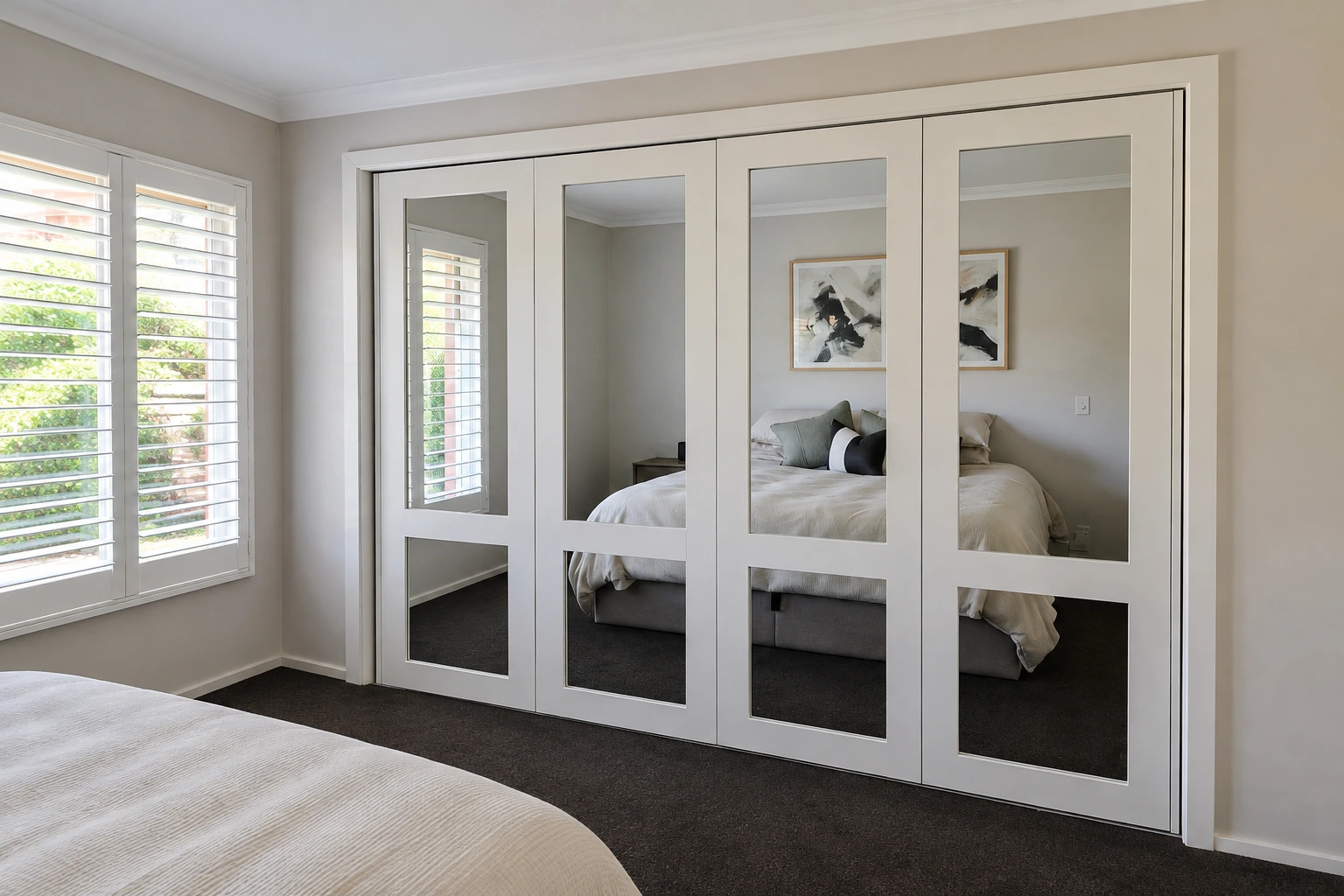
A bedroom has to fit a surprising amount into one space. Along with the bed and bedside tables, there are clothes, shoes, bedding, bags and everyday items to store. If the wardrobe takes up too much room or is difficult to access, the whole bedroom can start to feel cramped.
Sliding Door Wardrobes offer a practical alternative. Instead of swinging out into the room, the doors move sideways along their tracks. That small change can make a difference in bedrooms where furniture sits close to the wardrobe or where floor space is limited.
The real benefit goes beyond the doors themselves, though. A good wardrobe design makes sensible use of the available wall, provides storage for different types of belongings and keeps frequently used items easy to reach. For Melbourne homes, this can turn an otherwise underused wall into a useful and well-organized storage area.
Why Are Sliding Door Wardrobes Ideal for Melbourne Bedrooms?
One of the simplest advantages of Sliding Door Wardrobes is the lack of door-swing clearance.
A hinged wardrobe needs open space in front of it. When the door opens, it can get in the way of a bed, chair, desk or dresser. Sliding doors stay within the wardrobe’s footprint, so the area directly in front of the unit remains available for movement.
That can be particularly helpful in apartments, townhouses and smaller bedrooms. Melbourne homes come in many different shapes and sizes, so a wardrobe designed around the available wall can often make better use of the room than a standard unit.
There is also an opportunity to use the height of the room. Full-height cabinetry can provide extra storage above eye level for suitcases, spare bedding, seasonal clothing and other belongings that are not needed every day.
How Do Sliding Door Wardrobes Save Valuable Floor Space?
Think about the space in front of a wardrobe as part of the bedroom’s circulation area.
With hinged doors, some of that area has to remain clear so the doors can open. A sliding wardrobe does not need the same clearance. The panels move from side to side, which allows furniture and walking paths to sit closer to the wardrobe.
This is especially useful when the wardrobe is positioned opposite the bed. Instead of having to work around an open door, you can access the storage while keeping the main pathway clear.
That is why space-saving wardrobes can be useful in smaller bedrooms. The aim is not simply to reduce the size of the wardrobe. It is to get more storage from the available wall without taking unnecessary floor space away from the room.
How Can Sliding Wardrobe Storage Increase Capacity?
The door system is only one part of an effective wardrobe. What happens behind those doors matters just as much. Sliding Door Wardrobes can be designed with an interior layout that makes better use of the available space.
Rather than leaving the entire interior as one large open space, divide it according to the way you use your clothes and belongings. Hanging rails can handle shirts, jackets, dresses and coats. Shelves work well for folded clothing, while drawers keep smaller items together.
Depending on your needs, a wardrobe could include:
- Double hanging rails for shorter clothing
- Full-height hanging space for dresses and coats
- Adjustable shelves for folded garments
- Drawers for underwear, accessories and smaller items
- Dedicated storage for shoes, handbags and seasonal belongings
There is no single layout that works for every household. Someone with a large collection of dresses will need a different configuration from someone whose wardrobe is mostly casual clothing.
That is where thoughtful Sliding Door Wardrobes storage becomes valuable. The goal is not to squeeze as many compartments as possible into the cabinet. It is to make the available storage easy to use.
What Sliding Wardrobe Designs Work Best in Small Rooms?
A small bedroom does not necessarily need a small wardrobe. In many cases, the better approach is to use the available wall efficiently while keeping the exterior visually simple.
Floor-to-ceiling cabinetry can take advantage of vertical space. Simple door fronts can also make a large wardrobe feel less dominant in the room.
Mirrored panels are another option. Apart from providing a convenient full-length mirror, reflective surfaces can help a room feel brighter. The Australian Government’s energy guidance also notes that lighter furnishings and reflective surfaces can reduce the need for artificial lighting.
For a compact bedroom, useful space-saving wardrobe designs may include:
|
Design feature |
Storage advantage |
Best suited to |
|
Floor-to-ceiling cabinetry |
Makes use of higher wall space | Compact and standard bedrooms |
| Mirrored sliding panels | Combines storage with a full-length mirror |
Smaller or darker rooms |
|
Double hanging rails |
Creates more hanging capacity | Shirts, trousers and shorter garments |
| Adjustable shelving | Allows the layout to change |
Flexible storage needs |
|
Internal drawers |
Keeps smaller belongings organized | Accessories and everyday clothing |
| Wall-to-wall layout | Makes use of the available wall area |
Awkward or limited layouts |
The finished wardrobe should feel like part of the bedroom rather than a separate piece of furniture added afterward.
How Does a Sliding Wardrobe Interior Improve Organization?
A well-planned sliding wardrobe interior can make everyday routines easier. Sliding Door Wardrobes can be organized around the items you use most, helping create a more practical storage setup.
Start with the things you reach for most often. Everyday clothes should be positioned where they are easy to see and access, while seasonal items can go higher up or into less frequently used sections.
For example, shirts and trousers might sit at a comfortable hanging height, folded jumpers can occupy adjustable shelves, and accessories can be kept in drawers. Shoes and bags can have their own dedicated areas rather than being pushed into whichever space is left over.
It also helps to think about future changes. Clothing collections change, children grow and storage requirements rarely stay exactly the same. Adjustable shelving and a mixture of hanging and drawer space give the wardrobe some flexibility.
This is one reason built-in sliding wardrobes can be useful. The internal layout of Sliding Door Wardrobes can be planned around the actual dimensions of the room and the way the household uses its storage.
Which Materials and Door Finishes Should You Consider?
The finish of a wardrobe has a noticeable effect on the bedroom because the doors can cover a large section of the wall. Sliding Door Wardrobes can be finished in different materials and styles to suit the overall look of the room.
Mirrored panels can suit rooms where you want a dressing mirror and a lighter visual feel. Solid doors can create a simpler, more understated look. Timber-look finishes introduce warmth, while neutral colors can help the wardrobe blend with the surrounding walls.
Perfect Kitchen & Robes offers Melbourne sliding door systems with options including mirrored, frosted, clear and solid panels, along with aluminum framing and different track configurations. Sliding Door Wardrobes can also be customized with different panel and framing options to complement the bedroom.
A good-looking wardrobe will not be enjoyable to use if the doors are difficult to operate, so appearance and construction quality should be considered together.
What Should You Measure Before Installing Sliding Door Wardrobes?
Accurate measurements are important, particularly when the wardrobe is being built into an existing opening.
Measure the width, height and available depth of the space. It is also worth checking these measurements at several points because older walls and floors are not always perfectly straight or level.
Do not forget the surrounding features. Windows, skirting boards, power points, lighting and nearby furniture can all affect the final design.
The internal depth deserves attention too. If most of your storage will be used for hanging clothes, there needs to be enough room for garments to hang comfortably without interfering with the doors.
For built-in sliding wardrobes, professional measuring can help avoid problems with fitting, alignment and usable internal space.
Are Sliding Door Wardrobes Safe and Practical?
Safety is an important consideration when installing tall storage furniture such as wardrobes. The Australian Competition and Consumer Commission (ACCC) introduced a mandatory information standard for covered toppling furniture on 4 May 2025. It includes products such as wardrobes, bookcases and chests of drawers and provides requirements for safety warnings and anchoring information.
For more detailed Furniture safety guidance, the ACCC recommends securing applicable furniture to a wall or floor and keeping heavier items lower down to help reduce the risk of tipping.
Before installation, homeowners should check how the wardrobe will be secured and whether the fixing method suits the wall or structure. Choosing professional installation can help ensure the wardrobe is stable, secure and suitable for the room.
How Can Sliding Door Wardrobes Create a More Modern Bedroom?
A wardrobe can have a major visual impact because it often occupies an entire wall.
Large, uninterrupted panels can hide clothing and other belongings behind a clean surface, helping the room appear less cluttered. Minimal handles, consistent colors and full-height doors can reinforce that streamlined look.
The choice of finish can change the character of the room, too. A timber-look panel can make the space feel warmer, while a plain neutral finish can keep the wardrobe subtle. Mirrored doors can combine a practical purpose with a more open visual effect.
This makes modern sliding wardrobe designs useful for homeowners who want storage that feels integrated into the overall bedroom rather than looking like an afterthought.
What Are the Main Benefits of Sliding Door Wardrobes?
The biggest advantage of Sliding Door Wardrobes is the way they combine storage with efficient use of space.
They can be particularly useful when:
- The bedroom has limited floor space
- Furniture sits close to the wardrobe
- A wide wall needs to be used efficiently
- You want a built-in appearance
- You need storage designed around specific belongings
- You want to combine wardrobe doors with mirrors or other finishes
For more information about custom options, explore Perfect Kitchen & Robes’ sliding door solutions.
How Should You Plan Sliding Wardrobe Storage for Long-Term Use?
A wardrobe should work for more than the clothes you own today.
Instead of filling every available section with one type of storage, combine hanging areas, shelves and drawers. This gives you more flexibility when your storage needs change.
Seasonal organization can help as well. Summer clothing, coats, blankets and other less frequently used items can be moved into higher sections, leaving the most accessible areas for everyday belongings.
It is also worth reviewing what you actually need to store before finalizing the layout. Removing items you no longer use can free up space and make the remaining wardrobe easier to organize. Practical decluttering advice from CHOICE also recommends reviewing belongings that have not been used or worn for a long period.
For a custom wardrobe, the design should take into account the room’s dimensions, your storage habits and how those needs may change over time. Perfect Kitchen & Robes describes its Melbourne wardrobe process as involving measurements and consideration of storage requirements before the layout, materials and installation are finalized.
Conclusion:
Sliding Door Wardrobes are a practical way to add storage without taking up extra floor space. With the right mix of hanging areas, shelves and drawers, they can keep everyday items organized while giving the bedroom a cleaner look.
Planning a custom wardrobe in Melbourne? Call us today to discuss your space, storage needs and preferred design with Perfect Kitchen & Robes.
FAQs
1. Are Sliding Door Wardrobes suitable for small bedrooms?
Yes. Sliding Door Wardrobes save floor space because their doors move sideways instead of swinging outward. This leaves more room for furniture and comfortable movement.
2. Do Sliding Door Wardrobes provide enough storage for two people?
Yes, with the right internal layout. Separate hanging areas, shelves and drawers can be designed around each person’s clothing and storage requirements.
3. Are mirrored Sliding Door Wardrobes good for small rooms?
Yes. Mirrored Sliding Door Wardrobes combine storage with a full-length mirror and can make a compact bedroom feel brighter and more spacious.
4. Can I customize the interior of Sliding Door Wardrobes?
Yes. Custom Sliding Door Wardrobes can include hanging rails, adjustable shelves, drawers and dedicated accessory areas. The layout can be tailored to your specific storage needs.
5. How deep should a wardrobe be?
A typical built-in wardrobe for hanging clothing is around 550–600 mm deep, although the ideal depth depends on the room, door system and internal storage configuration.