
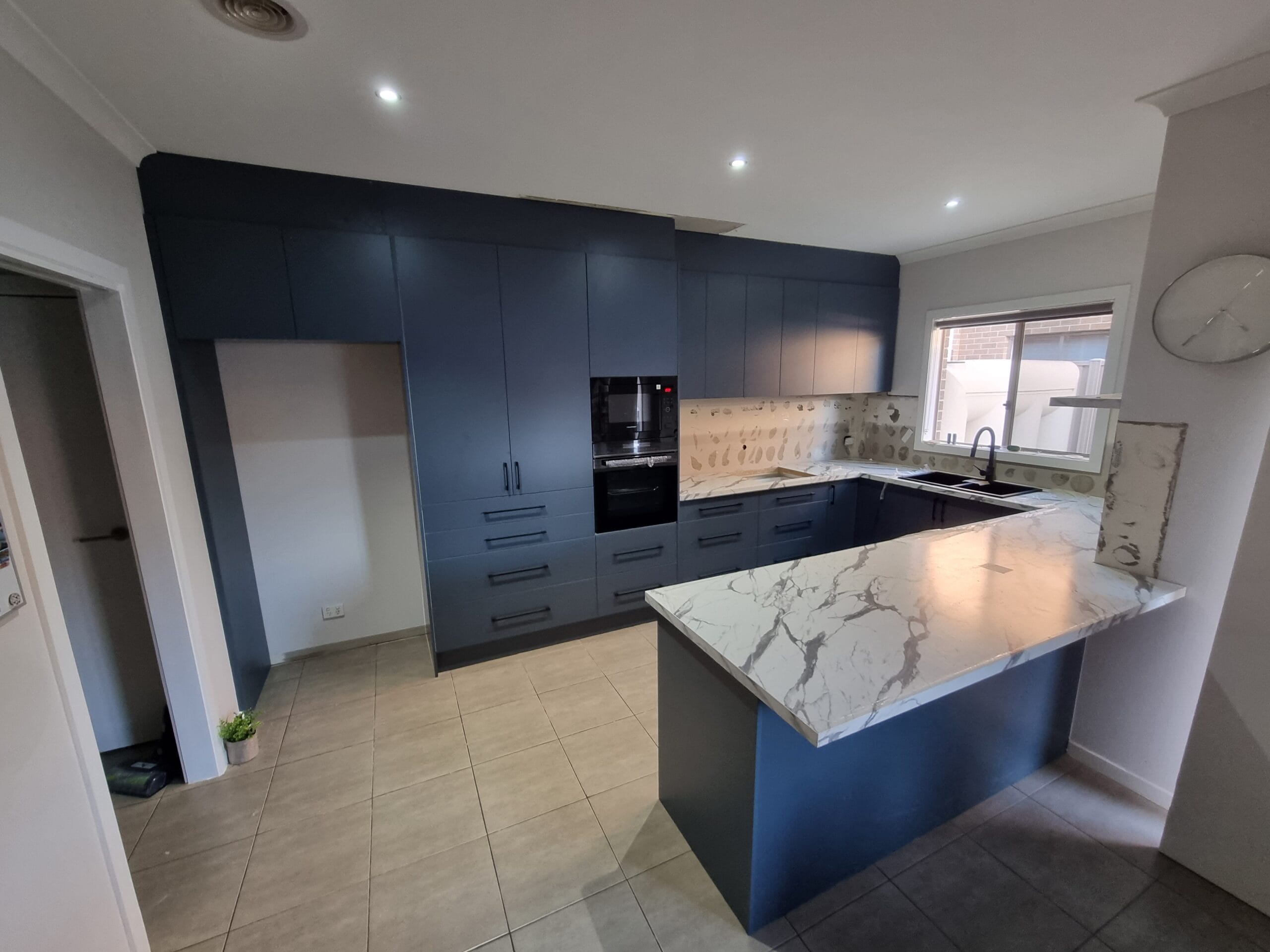
What You Need to Know Before You Start
Knowing how to install custom kitchen cabinets correctly can save you thousands of dollars and weeks of frustration. In short: measure your space precisely, locate wall studs, install upper cabinets first, then base cabinets, and check for level at every stage. Getting this sequence right is the difference between a kitchen that looks stunning for decades and one that causes headaches from day one.
Melbourne homes come in all shapes and sizes — from heritage weatherboards in the inner north to modern double-storeys in the outer suburbs. Each presents its own quirks: uneven floors, plaster walls over old brick, and varying stud spacings. Understanding your specific home’s construction before you pick up a drill is absolutely essential.
Tools and Materials You’ll Need
Before you begin, gather everything you need so the job runs smoothly. Running back to the hardware store mid-installation wastes time and breaks your momentum. Here’s what you’ll typically need:
- Tape measure, spirit level, and laser level
- Stud finder
- Power drill and screwdriver set
- Clamps (at least four)
- Pencil and chalk line
- Shims (timber wedges for levelling)
- Cabinet screws (typically 75 mm for stud fixing)
- Safety glasses and hearing protection
Quality tools make a genuine difference. A cheap spirit level that’s slightly off will compound errors across every cabinet you hang, leaving you with doors that won’t close properly and benchtops that slope toward the sink.
Step-by-Step: How to Install Custom Kitchen Cabinets
Step 1 — Mark Your Reference Lines
Start by finding the highest point of your floor using a long spirit level or laser level. This becomes your baseline. From there, mark a horizontal line at the standard base cabinet height — typically 870 mm from the floor to the top of the cabinet, allowing for a 20 mm benchtop. Mark your wall stud positions clearly with a pencil; most Melbourne homes have studs at 450 mm or 600 mm centres.
Step 2 — Install Upper Cabinets First
Always hang your wall cabinets before fitting the base units. This gives you clear floor space to stand on and manoeuvre safely. Mark the underside of your upper cabinets at the correct height — typically 600 mm above the benchtop, giving you a 600 mm splashback zone. Use a temporary ledger board (a straight piece of timber screwed horizontally to the wall) to support the cabinets while you fix them.
Drive cabinet screws through the cabinet’s internal hanging rail directly into wall studs. Never rely solely on plasterboard anchors for cabinetry — the weight of dishes, cookware, and appliances demands a solid structural fixing. Clamp adjacent cabinets together and check that their faces are perfectly flush before final tightening.
Step 3 — Fit the Base Cabinets
Position your base cabinets along the wall, starting from a corner. Use timber shims under the cabinet bases to bring everything up to your reference line — this is how you compensate for an uneven floor, which is extremely common in older Melbourne homes. Check for level in both directions: front-to-back and side-to-side.
Once level, screw the cabinets to the wall studs through the internal hanging rail at the back. Then clamp and screw adjacent cabinets together through their side panels, drilling pilot holes first to avoid splitting. Keep checking for level as you work your way along the run.
Step 4 — Hang Doors and Adjust Hinges
Modern concealed hinges (often called European-style or cup hinges) allow for three-way adjustment: up/down, side/side, and in/out. Take your time here. Small adjustments make a big visual difference, and properly aligned doors are the hallmark of quality cabinet installation. Refer to the hinge manufacturer’s instructions, as adjustment screws vary between brands.
Step 5 — Install Drawer Runners and Hardware
Soft-close drawer runners and handles are the finishing touches that elevate a kitchen from good to exceptional. Fix drawer runners according to the manufacturer’s specifications, ensuring they’re perfectly parallel. Even a 1 mm deviation can cause a drawer to bind or sit crooked.
Common Mistakes Melbourne Homeowners Make
One of the most frequent errors is skipping the laser level and relying on a short spirit level alone — over a 3-metre run of cabinetry, small errors multiply quickly. Another common issue is not accounting for out-of-square corners, which are almost universal in existing Melbourne homes. Always scribe your end panels to fit the wall rather than assuming the corner is 90 degrees.
If you’re also planning storage solutions elsewhere in your home, the same precision principles apply — just as they do for cabinet installations in Craigieburn and surrounding suburbs, where new builds can still present tricky wall conditions.
Understanding Australian Standards for Kitchen Installations
Kitchen cabinetry in Australia is covered under AS/NZS 4386, which sets out requirements for domestic kitchen furniture including structural integrity, finish quality, and hardware performance. While this standard is primarily aimed at manufacturers, it’s worth knowing when you’re specifying or purchasing custom cabinets — it tells you what quality benchmarks your cabinetry should meet.
If your kitchen renovation involves any electrical or plumbing work — moving a power point, relocating the sink, or repositioning an appliance connection — those elements must be carried out by a licensed tradesperson under Victorian regulations. Cabinet installation itself doesn’t require a licence, but the surrounding trades often do.
When to Call a Professional
There are situations where DIY cabinet installation is simply not the right call. If your kitchen involves complex corner configurations, floor-to-ceiling cabinetry, integrated appliances, or structural walls, the margin for error is too slim to risk. A misaligned run of cabinets can mean benchtops that don’t fit, appliances that won’t slide in, or doors that permanently bind.
The team at Perfect Kitchen & Robes has extensive experience fitting custom cabinetry across Melbourne’s diverse housing stock — from compact inner-city apartments to spacious family homes in the northern suburbs. If you’d like expert advice or a no-obligation measure and quote, get in touch with Perfect Kitchen & Robes today. You can also explore their work with cabinet makers in Epping to get a sense of the quality and craftsmanship on offer.
Conclusion
Learning how to install custom kitchen cabinets is absolutely achievable for a confident DIYer — provided you take the time to measure carefully, work methodically, and never cut corners on structural fixings. Start with your reference lines, hang upper cabinets first, shim base cabinets level, and finish with precise door and drawer adjustments.
That said, custom kitchens are a significant investment, and the installation quality directly determines how long they look and perform at their best. When the job is complex or the stakes are high, bringing in experienced professionals is always the smarter move. Reach out today to discuss your Melbourne kitchen project and get it done right the first time.
Frequently Asked Questions
Do I need council approval to install new kitchen cabinets in Melbourne?
In most cases, replacing or installing kitchen cabinets is considered a cosmetic renovation and does not require a building permit in Victoria. However, if your renovation involves structural changes, moving walls, or significant alterations to plumbing and electrical layouts, you may need to engage a registered building practitioner and obtain the relevant permits. Always check with your local council if you’re unsure.
What is the standard height for kitchen wall cabinets in Australia?
The standard installation height for wall cabinets in Australian kitchens is typically 600 mm above the benchtop surface, placing the underside of the wall cabinet at approximately 870 mm from the floor (assuming a standard 20 mm benchtop). This can be adjusted to suit the height of the household’s occupants or specific design requirements.
How do I fix cabinets to a brick wall in an older Melbourne home?
Fixing cabinets to brick or masonry requires masonry drill bits and appropriate masonry anchors or rawl bolts rather than standard timber screws. You’ll need to drill into the mortar joints or the brick itself, use the correct anchor for the load, and ensure your fixings are rated for the weight of the cabinetry plus its contents. If in doubt, consult a professional cabinet maker or builder.
How long does it take to install a full set of custom kitchen cabinets?
For an experienced installer, a standard kitchen with upper and lower cabinets typically takes one to two full days to install. For a DIYer working carefully and methodically, allow two to three days, particularly if your walls are uneven or the layout involves complex corners. Rushing the installation is the most common cause of alignment problems down the track.