
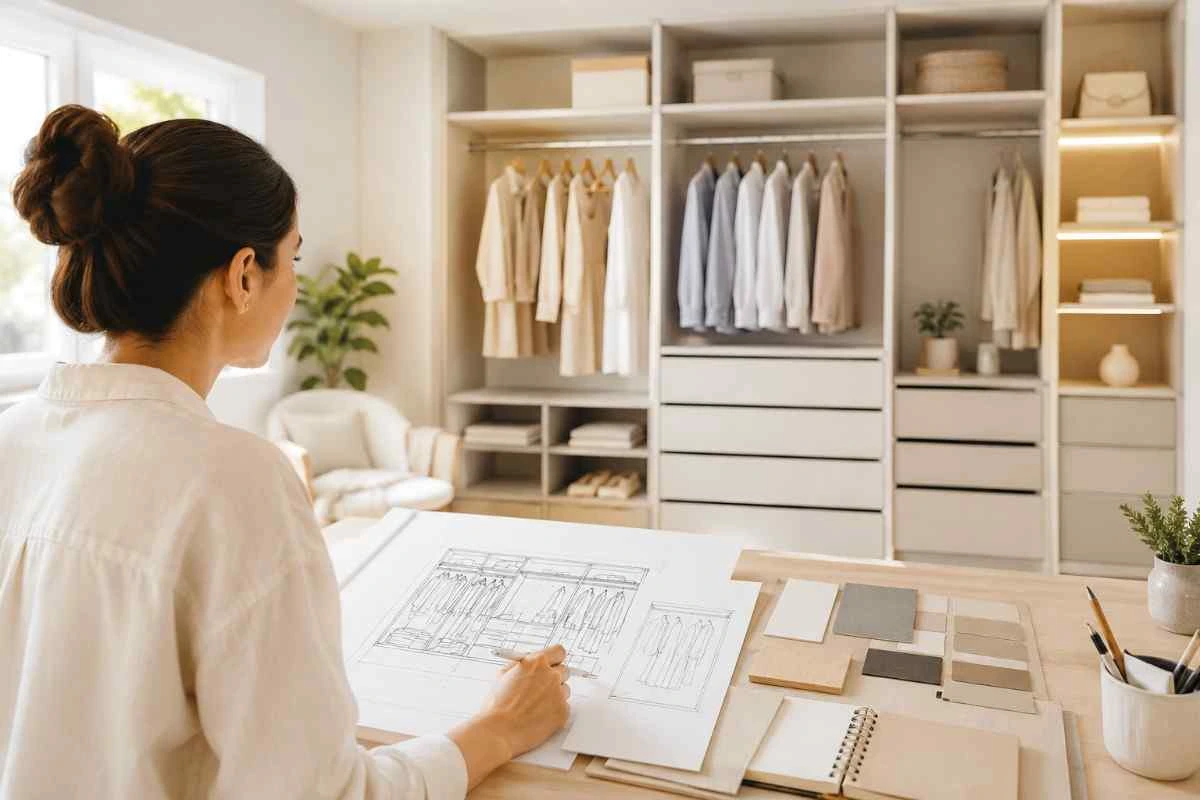
Planning custom wardrobes is an exciting chance to create the perfect storage fit for your lifestyle especially useful in Melbourne homes where clever storage is a premium. But get ready: it’s easy to stuff it up and end up with awkward gaps, wasted space or a storage solution that only kind of works.
I’ve seen many folks fall into the same traps when planning their custom wardrobes and storage solutions. From overlooking your actual needs to forgetting about lighting, these hiccups can turn a dream closet into a frustrating eyesore. But fear not by spotting these blunders upfront, you can keep your custom wardrobe project on track. Ready to dive in? Let’s unpack the design mistakes to dodge so you end up with a wardrobe you absolutely love.
Start with a Clear Vision and Inventory
Jumping into wardrobe design without a clear plan is a guaranteed recipe for headaches later. Before you pick a single door style or shelf colour, pause and take stock of what you actually own and use. How many coats and long dresses do you have? More tees or shirts? Shoes galore or a humble pair or two? Think through every category: hanging clothes, folded items, shoes, accessories. Write it down or lay it out. That inventory will tailor your design to your life, not just a Pinterest board.
When I help clients with custom wardrobes, the first thing I ask is, “What’s in your closet right now and how do you use it?” Without that insight, even the slickest design can leave you wishing for more drawers or an extra hanging rail. Knowing your own habits means every inch of your new wardrobe works for you.
Balance Hanging, Shelves, and Drawers
One big mistake in designing custom wardrobes is focusing only on hanging space. Sure, seeing rows of jackets and shirts might look neat, but if you skip drawers and shelves entirely, you’ll quickly run out of options. A custom wardrobe needs a bit of everything. Drawer modules for socks and underwear, shelves for folded jeans and jumpers, shoe racks or cubbies for trainers, and yes both long and short hanging rails. If you only plan for hanging bars, everything that needs shelving or a drawer will end up in a chaotic heap.
To keep things organised, plan a balanced layout. Maybe double up on hanging rails for everyday clothes, a bank of drawers for socks and bras, and open shelves for sweaters and bags. Slide-out racks for shoes or shallow pull-out drawers can save tonnes of floor space and prevent tripping over sneakers. This way, everything from trousers to trainers has its place.
Tip: Think of your custom wardrobe as a boutique in your bedroom. A well-organised shop has sections for shirts, pants, accessories and shoes; your wardrobe should too. That mix of storage options will save you stumbling around every morning.
Don’t Forget Lighting and Accessibility
You might not realise it until it’s built, but good lighting in your wardrobe is vital. Imagine opening your new wardrobe only to have your favourite shirt vanish in a dark corner, or your matching socks playing hide-and-seek. Poor visibility leads to constant rummaging and that dreaded “I have nothing to wear” panic.
Plan to include built-in lights for your custom wardrobes or motion-sensor LEDs in the design. Even a strip of LED lights along the top or sides makes a huge difference they highlight finishes and create a bit of luxury as you choose outfits. For example, official government renovation guidelines recommend specifying low-VOC laminates for wardrobes and cabinets (see YourHome.gov.au guide), which is just common sense since we spend a lot of time around them. In practice, that means choosing finishes that won’t off-gas as they bake in closed spaces. Good lighting is one of those details that turns a functional space into something nearly boutique-like, and it saves time every day.
Also think about how you’ll reach things: if a shelf is too high or a drawer too low, it becomes a hassle. Keep everyday items at chest or waist height, and move seasonal or rarely-used stuff up top. A small fold-out step or sliding shelf can fix awkward heights. If you’re tall, put hats and scarves on the lower racks; if you’re on the shorter side, keep shoes in easy-to-see drawers. I once designed a wardrobe with sensor lights that come on when you open the door; the client was stoked. Smart lighting and easy access mean you won’t be craning your neck or crouching every time you grab an outfit.
Mind the Door Style and Space in Custom Wardrobes
Choosing the right doors for your custom wardrobes is about more than looks it’s a space issue too. Many people pick sleek sliding doors because they look modern, but forget that you can only access half the wardrobe at once. If you’re designing a big walk-in robe, that’s fine. But in a smaller walk-in or a built-in in your bedroom, check if sliders make sense.
Hinged doors give you full-width access, but they need enough room to swing. A quick rule of thumb: leave about 60–90 centimetres of clearance in front for swinging doors so you can move around comfortably. If you don’t plan for that space, doors might collide with your bed or dresser. For a cramped custom wardrobe or small walk-in, consider bi-fold or even pocket doors that tuck away.
Table: Wardrobe Door Types – Pros and Cons
|
Door Type |
Advantages | Disadvantages |
|
Sliding |
Sleek look, no swing clearance needed | Only half the wardrobe accessible at once; tracks need occasional upkeep |
| Hinged | Full access to all contents at once; classic style |
Requires clear floor space to swing; multiple doors can clutter the room |
|
Bi-fold |
Larger opening than sliding; doesn’t need extra wall | Hinges need some space; possible pinch points if not aligned right |
| Completely out of the way when open |
Requires space inside the wall; complex install |
This table sums it up: choose your door style based on the room’s layout. Don’t force a hinged door into a spot with no clearance (that’s a common regret!), and don’t squeeze sliders into a tiny nook where you rarely open them fully. Think through how the doors will operate with nearby furniture and foot traffic.
Invest in Quality Materials and Hardware
For custom wardrobes, opt for moisture-resistant boards and solid hardware. It can be tempting to cut corners on materials when you see cheap plywood or laminate. But a flimsy board can sag, and bargain-basement runners or hinges will squeak or fail before you know it. Choose finishes that won’t warp with humidity (especially important if a wardrobe is near a laundry or bathroom wall) and high-quality sliders and hinges with soft-close if you can.
A common oversight in any wardrobe project is ignoring how weight adds up. Think ahead: if you plan a stone-topped island in a big walk-in, or you own a mountain of shoes, make sure each shelf and rail can bear the load. A well-built custom wardrobe should use heavy-duty rails and extra support for deeper shelves. If not, doors sag or shelves droop in a few years no one wants that.
custom wardrobes
Even the Australian Government points out it’s wise to choose low-VOC laminates and certified timber for cabinets, which applies to wardrobes too. In short, use trusted brands for the carcass and doors so your wardrobe doesn’t off-gas or fall apart. Remember: when it comes to custom cabinetry, good materials and quality installation save you from constant cabinet repairs down the line.
Future-Proof Your Wardrobes
It’s easy to design custom wardrobes for today, but hard to predict your needs in five years. A classic mistake is building storage that exactly fits the clothes you have right now. Life changes – maybe you’ll get a new job, pick up a hobby, or expand your shoe collection. So leave some wiggle room. Adjustable shelves are your friend – they let you move things around as your collection changes.
One design-savvy couple I know left extra vertical space and later added a third hanging rail when they stocked up on suits. They didn’t have to gut the whole wardrobe to do it. Think about zones too: if you share the wardrobe, carve out separate areas from the start. Otherwise you might end up wrestling over drawers.
A tip: ask yourself, “What else might I store here besides clothes?” Maybe luggage, sports gear, extra linen or ironing boards. If the answer is yes, factor that into the plan. A few clever compartments or taller shelves for out-of-season items will keep your wardrobe working well as your life evolves. When things change, your wardrobe can simply shift with you.
Trust the Process and Professionals
Custom wardrobes projects involve many steps measuring, designing, manufacturing, and installing. Sometimes DIYers think, “It’s just shelves, how hard can it be?” and then end up with gaps or wonky drawers. So resist the urge to rush your custom wardrobes build. Get accurate measurements. If your space isn’t perfectly square, a pro will compensate.
Melbourne has heaps of qualified cabinet makers and custom cabinet makers who specialise in wardrobes. Use them! During a consultation, a good wardrobe designer will catch stuff you might miss maybe an awkward pillar in the corner, or which light switch conflicts with a door swing. And hey, if you’re also doing a kitchen cabinet renovation or adding a new bathroom, align the styles. For example, if you adore your kitchen cabinets, use the same finish on your wardrobe. Many kitchen cabinet makers do wardrobes too, so the look flows. No such thing as over-sharing ideas with your designers.
Summary Checklist for Your Custom Wardrobes: before final sign-off, make sure:
- You’ve listed all categories of items you store.
- The layout includes varied storage.
- Doors have enough clearance or the right type for your room.
- There’s internal lighting or the room lights cover the space.
- Chosen materials can handle expected moisture and weight.
- There’s a little extra wiggle room for future needs.
- You’ve had a pro double-check measurements and installation plans.
Conclusion
Building custom wardrobes is like tailoring a suit it needs perfect measurements, quality materials, and a touch of personal style. By avoiding these design missteps , you’ll end up with a closet that’s both practical and pleasing.
Now, with these tips on custom wardrobes in mind, it’s time for action. Grab a notebook, sketch out your needs, and talk to a cabinet maker about your dream wardrobe. Need help? Reach out to a Melbourne wardrobe specialist or comment below. You’ll thank yourself every morning for the smart planning.
FAQ
-
Do I need a professional for wardrobe installation?
You can tackle a very simple DIY built-in if you’re handy, but it’s often safer to get a pro. Accurate measurements and level installation are tricky. Plus, if you’re doing cabinet installation for your kitchen or bathroom at the same time, a cabinet maker can usually handle wardrobes too. A pro ensures your custom wardrobes fit like a glove and avoids those “oops, I forgot…” moments.
-
How do I match my wardrobe with other cabinets?
Choose the same materials or finishes. For example, if you love your kitchen cabinets, use the same veneer for custom wardrobes. Many kitchen cabinet makers handle both kitchens and wardrobes, so the look will be consistent. This way, your home has a unified style the wardrobe won’t stick out as the odd one.
-
What’s the difference between a wardrobe cabinet and bathroom vanities?
Wardrobe cabinets are all about storage – hanging rails, shelves and drawers whereas bathroom vanities are built around a sink and usually need waterproof surfaces. However, a bathroom cabinet maker often uses similar moisture-resistant materials on vanities as we’d want for any wardrobe near humidity. In essence, they use the same quality boards and finishes, just arranged differently.
-
What should I look for in a cabinet maker?
Check experience and portfolio. Look at examples of wardrobes or other custom cabinets they’ve done. Ask if they handle everything from design to wardrobe installation. A cabinet maker who’s done kitchen cabinet renovations, bathroom vanities, and wardrobes will have broad skills. Also ask about warranty or cabinet repairs knowing they support their work builds confidence.
-
Can I do a kitchen wardrobe design?
If you mean a pantry or walk-in scullery, sure! It’s basically a kitchen wardrobe. Layout priorities differ, but many storage principles are the same. For instance, you can use pull-out drawers and adjustable shelves like a closet, just for food instead of clothes. Think of it as a cupboard on steroids.
-
How do I maintain my custom wardrobes long-term?
Keep them tidy and don’t overload any shelf. Clean tracks and hinges occasionally so doors slide smoothly. Tighten screws on handles or drawer front as needed – it’s easy for fittings to loosen over time. If a repair is needed, call a cabinet repair expert before it worsens. Regular little fixes will keep your custom wardrobes running like new for years.