
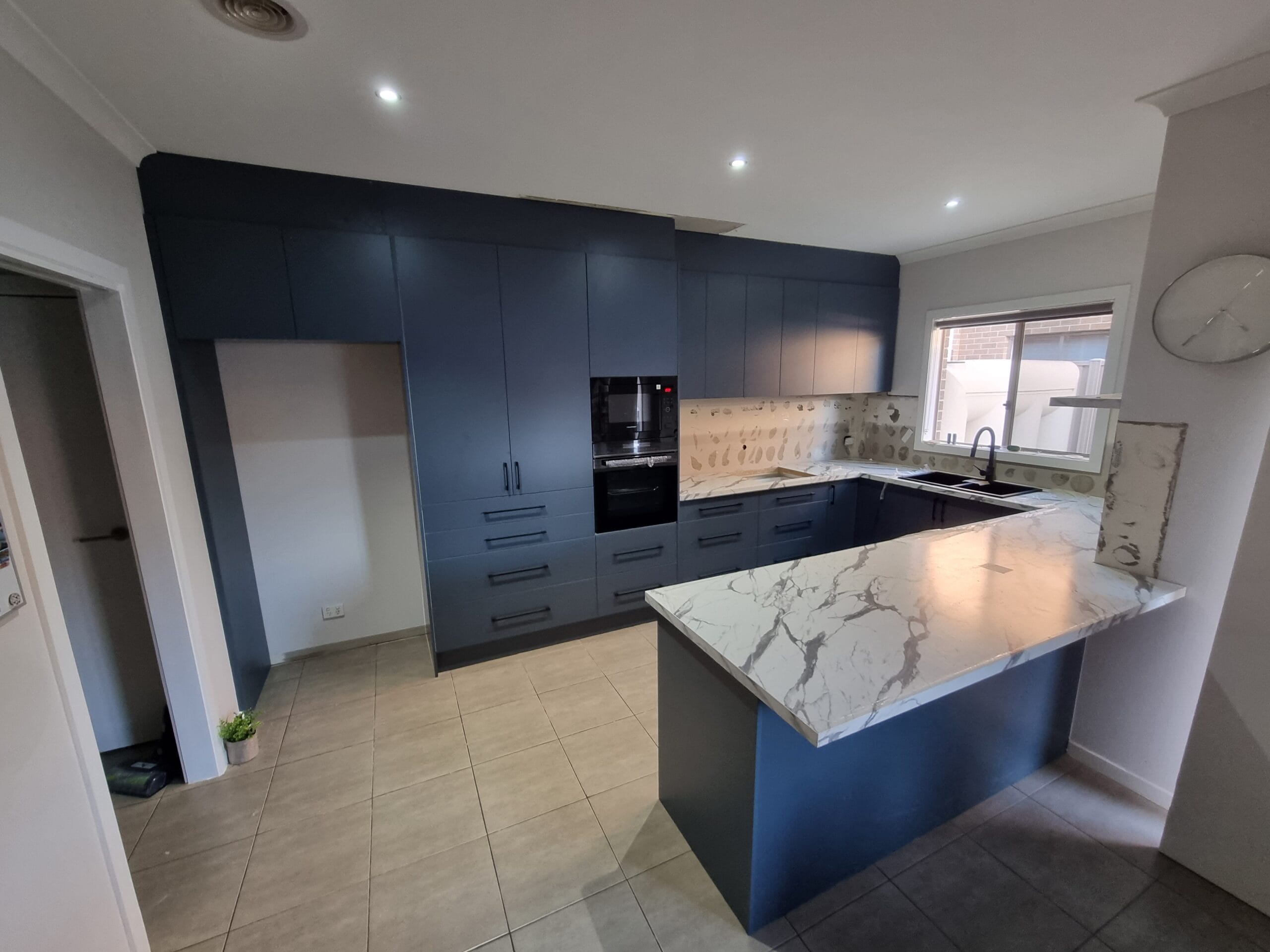
Can You Really Paint Your Kitchen Cabinets Yourself?
If you’re wondering how to paint custom kitchen cabinets, the short answer is yes — with the right preparation, primer, and paint system, most Melbourne homeowners can achieve a durable, professional-looking finish without a full cabinet replacement. The key is in the prep work, not just the painting itself.
Whether your kitchen is looking tired after years of Melbourne’s humid summers and cold winters, or you simply want a fresh look without the cost of new cabinetry, repainting is one of the most cost-effective renovation options available. Done correctly, a repaint can add years of life to your existing cabinets.
Why Melbourne Homes Require Special Consideration
Melbourne’s climate is notoriously unpredictable. Humidity fluctuates significantly between seasons, and temperature swings can cause timber and MDF cabinet doors to expand and contract. This movement affects how paint adheres and how long it lasts.
If your home was built in the 1980s or 1990s — common across Melbourne’s northern suburbs — your cabinets may be made from particleboard with a melamine or vinyl wrap finish. These surfaces require specific primers and adhesion promoters to hold paint properly. Skipping this step is one of the most common mistakes DIYers make.
Tools and Materials You’ll Need
Before you start, gather everything you need so the job doesn’t stall halfway through. Rushing out to the hardware store mid-project is a recipe for uneven results.
- 120-grit and 220-grit sandpaper or a sanding block
- Tack cloth or a lint-free damp rag
- Oil-based or water-based adhesion primer
- Cabinet-specific enamel or acrylic paint (semi-gloss or satin finish)
- A quality 100mm angled brush for edges and detail work
- A small foam roller for flat panel surfaces
- Painter’s tape and drop sheets
- Screwdriver for removing doors and hardware
- TSP (trisodium phosphate) or a degreasing cleaner
Investing in quality tools makes a genuine difference. Cheap foam rollers leave bubbles, and low-grade brushes leave streaks — both of which are very visible on cabinet doors in natural light.
Step-by-Step: How to Paint Custom Kitchen Cabinets
Follow these steps carefully and you’ll achieve a finish that looks factory-applied rather than DIY. Skipping any stage — especially cleaning and sanding — will compromise the final result.
Step 1: Remove Doors, Drawers, and Hardware
Always remove cabinet doors, drawer fronts, and all hardware before you begin. Label each door with a piece of masking tape so you know exactly where it goes back. Painting doors while they’re still on the hinges leads to drips, missed spots, and uneven coverage.
Step 2: Clean All Surfaces Thoroughly
Kitchen cabinets accumulate grease, cooking residue, and grime — even if they look clean. Use a TSP substitute or a dedicated degreaser to wipe down every surface you plan to paint. Allow surfaces to dry completely before moving on.
Step 3: Sand for Adhesion
Lightly sand all surfaces with 120-grit sandpaper to scuff the existing finish. This gives the primer something to grip. Follow up with 220-grit for a smoother base. Wipe away all dust with a tack cloth — any residue left behind will show through the topcoat.
Step 4: Apply Adhesion Primer
This is the most critical step when learning how to paint custom kitchen cabinets on melamine or vinyl-wrapped surfaces. Apply one to two coats of a quality adhesion primer, allowing full drying time between coats as specified by the manufacturer. Don’t rush this stage — the primer is what makes the paint stick long-term.
Step 5: Apply Your Topcoat
Use a cabinet-grade enamel paint for the best durability. Apply two to three thin coats rather than one thick coat. Thin coats dry faster, level better, and resist sagging. Lightly sand with 220-grit between coats for an ultra-smooth finish. A semi-gloss sheen is ideal for kitchens as it’s easier to wipe clean.
Step 6: Reassemble and Cure
Allow the final coat to cure fully — typically 5–7 days — before reinstalling doors and hardware. Paint may feel dry to the touch within hours, but it hasn’t reached full hardness. Hanging doors too early can cause the paint to stick to itself or dent easily.
Choosing the Right Paint Colour for Your Melbourne Kitchen
Neutral tones like warm whites, soft greys, and sage greens are consistently popular in Melbourne homes. They work well with both timber benchtops and stone surfaces. If you’re considering a darker colour like navy or charcoal, be aware that these shades show fingerprints more readily and may require more frequent cleaning.
If you’re planning a broader renovation and want cabinetry that’s built to last rather than repainted, it’s worth exploring options from experienced cabinet makers in Craigieburn who can advise on durable finishes from the outset.
Common Mistakes to Avoid
Even experienced DIYers make avoidable errors. Keep these pitfalls in mind before you pick up a brush:
- Painting over dirty or greasy surfaces — paint will peel within weeks
- Skipping primer on melamine or laminate surfaces
- Using wall paint instead of cabinet-grade enamel — wall paint is too soft for high-touch surfaces
- Applying thick coats to speed up the job — this causes sagging and brush marks
- Painting in high humidity or extreme heat — Melbourne summers can push temperatures above 35°C, which affects drying and levelling
- Reinstalling doors before the paint has fully cured
When to Call a Professional
Some situations genuinely call for expert hands. If your cabinet doors are warped, the substrate is damaged, or you’re dealing with extensive delamination on melamine panels, a DIY repaint won’t solve the underlying problem — it will just hide it temporarily.
Similarly, if you want a spray-applied finish that’s truly indistinguishable from factory cabinetry, that requires professional spray equipment and a controlled environment. The team at Perfect Kitchen & Robes in Epping and the broader Melbourne area can assess your existing cabinetry and advise whether a repaint, refacing, or full replacement is the most cost-effective solution for your home.
If you’re also considering a wider home upgrade — including storage solutions — you can explore options like custom cabinet work in Thomastown to get a cohesive result throughout your home. Don’t hesitate to reach out for an obligation-free consultation before committing to a full DIY project.
Conclusion
Knowing how to paint custom kitchen cabinets properly can transform your kitchen without the expense of a full renovation. The process comes down to thorough preparation, the right primer for your cabinet material, quality cabinet-grade paint applied in thin coats, and patience during the curing phase.
Melbourne homeowners in particular need to factor in climate conditions and the specific substrate of their existing cabinets before diving in. When the job is done right, a repainted kitchen can look stunning and last many years. And if you’d prefer a guaranteed professional result, Perfect Kitchen & Robes is ready to help — get in touch today for expert advice tailored to your home.
Frequently Asked Questions
What type of paint is best for kitchen cabinets in Melbourne?
Cabinet-grade water-based enamel or alkyd enamel paints are the best choice for kitchen cabinets. They cure to a hard, washable finish that holds up to daily use. Look for products specifically labelled for cabinetry or trim, and choose a semi-gloss or satin sheen for easy cleaning.
Do I need to sand kitchen cabinets before painting?
Yes, sanding is essential. It scuffs the existing surface so the primer can bond properly. Use 120-grit sandpaper for the initial scuff, then 220-grit between coats for a smooth finish. Never skip this step, especially on melamine or laminate surfaces.
How long does it take to paint kitchen cabinets?
A full kitchen cabinet repaint typically takes 3–5 days from start to reassembly, depending on the number of doors, drying times, and how many coats you apply. Factor in an additional 5–7 days of curing time before the paint reaches its full hardness and you reinstall hardware.
Is it worth painting kitchen cabinets instead of replacing them?
In many cases, yes — particularly if the cabinet boxes are structurally sound and the doors are in good condition. Repainting can cost a fraction of full replacement and deliver a dramatically refreshed look. However, if the substrate is damaged or heavily warped, replacement or professional refacing may be the better long-term investment. For more about what we do, visit our homepage.