
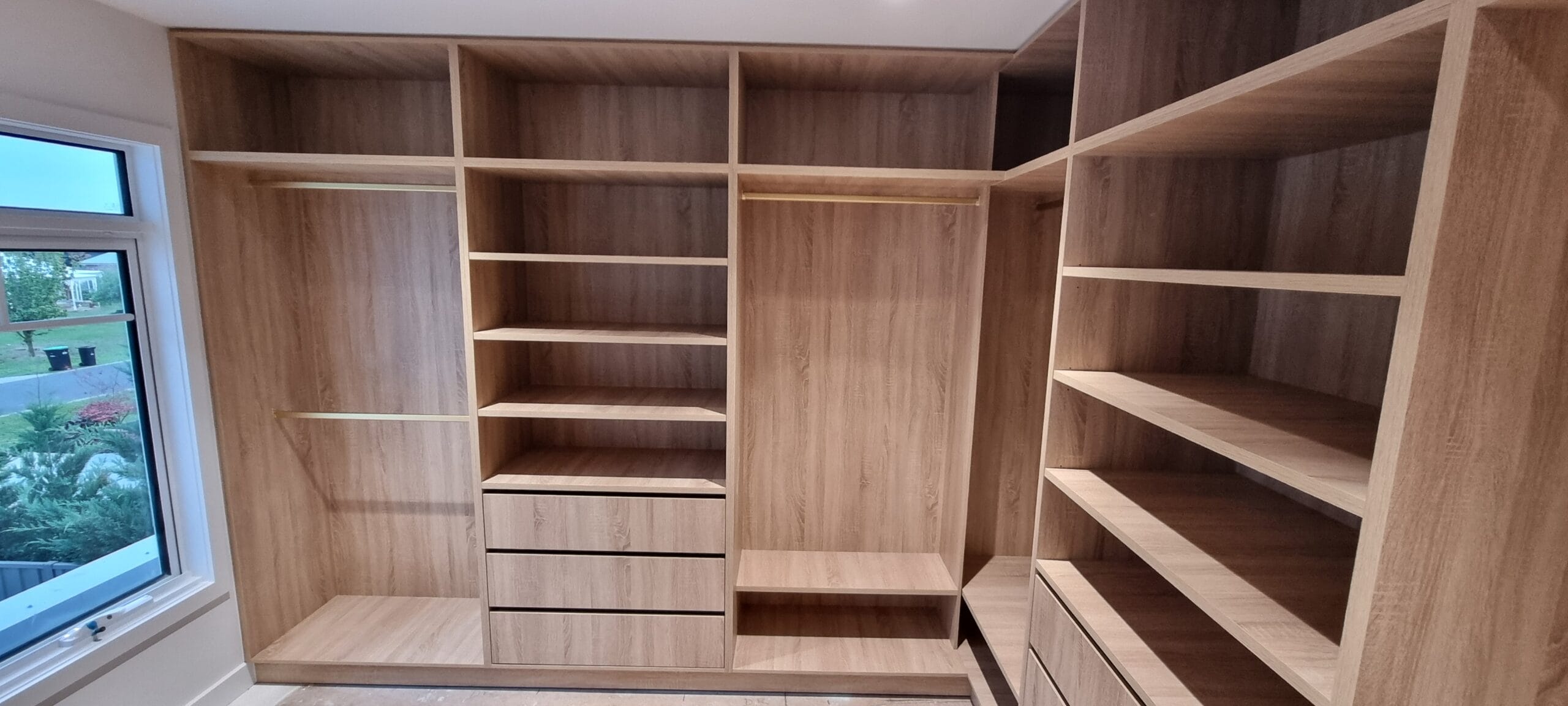
So, how long do soft close hinges last? In most Australian homes, quality soft close hinges last between 10 and 20 years with normal use — that’s roughly 50,000 to 100,000 open-and-close cycles before the damping mechanism starts to wear. The exact lifespan depends on hinge quality, installation, cabinet use, and how well you maintain them.
What Are Soft Close Hinges and How Do They Work?
Soft close hinges are concealed cabinet hinges fitted with a small hydraulic or spring-loaded damper. That damper is what slows the door in the final few centimetres of closing, preventing it from slamming. You’ll find them on kitchen cabinets, bathroom vanities, laundry joinery, and built-in wardrobes throughout Melbourne homes.
The mechanism is relatively simple but precision-engineered. Most quality hinges — brands like Blum, Grass, and Hettich — are rated to 100,000 cycles under controlled test conditions. Budget hinges from discount hardware stores are typically rated far lower, sometimes as few as 20,000 cycles.
How Long Do Soft Close Hinges Last in a Real Melbourne Home?
In practice, the answer varies significantly depending on where the hinges are installed. A pantry door opened three or four times a day will reach 50,000 cycles in roughly 35 years. A busy kitchen bin cabinet opened 20 times a day hits that same number in under seven years.
Melbourne’s climate also plays a role. Our city’s notorious four-seasons-in-one-day weather means timber and MDF cabinetry can expand and contract with humidity and temperature shifts. This puts additional lateral stress on hinges, which can accelerate wear on the damper housing if the hinge isn’t correctly adjusted.
Factors That Shorten Hinge Lifespan
- Heavy or oversized doors — wide or thick cabinet doors place more torque on the hinge arm, overworking the damper
- Incorrect installation — hinges that aren’t plumb or are under-tensioned force the damper to compensate for misalignment
- Low-quality hinges — budget hinges with plastic damper housings degrade far faster than steel or zinc alloy alternatives
- Lack of lubrication — hinge pivot points can corrode or seize, especially in steamy bathroom or laundry environments
- Forced closing — slamming doors repeatedly overrides the damper and causes premature fatigue
Signs Your Soft Close Hinges Are Wearing Out
You don’t need to be a tradesperson to spot a failing hinge. The most obvious sign is a door that no longer closes gently — it either slams shut, stops closing altogether, or drifts open on its own. You might also notice the door sitting slightly crooked in the frame, which indicates the hinge has lost its tension or the mounting screws have worked loose in the substrate.
A squeaking or grinding noise when opening the door is another red flag. This usually means the pivot mechanism is dry or corroded. In some cases, a simple clean and lubrication with a silicone-based spray will restore smooth operation without any need for replacement.
Simple Maintenance That Extends Hinge Life
Keeping your soft close hinges in good working order doesn’t require specialist tools. A few basic habits can add years to their service life:
- Check and tighten mounting screws every 12–18 months — screws that have worked loose in particleboard allow the hinge cup to rock, stressing the damper
- Apply a small amount of silicone lubricant to the pivot arm once a year — avoid oil-based products that attract dust and grime
- Adjust the hinge tension if the door is closing too fast or too slowly — most European-style concealed hinges have a small adjustment screw on the damper
- Clean around the hinge cup to remove grease and debris, particularly in kitchen environments where cooking residue builds up
These steps take less than 10 minutes per cabinet and are well within the capability of any handy homeowner. You genuinely don’t need to call a professional just because a hinge feels slightly sluggish.
Can You Replace Soft Close Hinges Yourself?
Replacing a worn hinge is straightforward if the existing hinge cup hole is in good condition. Most soft close hinges use a standard 35mm cup bore, so a direct replacement from a hardware supplier will drop straight in. If the surrounding particleboard is stripped or crumbling, however, you’ll need to either use larger screws, fill the hole with a timber insert, or consider professional cabinet repair.
If you’re upgrading older cabinetry — say, retrofitting soft close hinges to a kitchen that originally had standard hinges — you’ll need to confirm the overlay type (full overlay, half overlay, or inset) before purchasing replacements. Getting this wrong means the door won’t align properly with the cabinet frame. For guidance on choosing the right joinery hardware for your home, the team at Perfect Kitchen & Robes can advise on compatible hinge specifications.
When to Call a Professional
There are situations where a DIY fix simply isn’t the right call. If multiple hinges across your cabinetry are failing at the same time, it often points to a systemic issue — poor-quality hinges used during the original installation, cabinetry that has moved off-square, or substrate damage from moisture. Attempting to replace all of them without addressing the root cause means you’ll face the same problem again within a few years.
If your doors are sagging, the cabinet carcass is showing signs of moisture damage, or you’re planning a full kitchen or wardrobe renovation, it’s worth getting a professional assessment. Perfect Kitchen & Robes works with Melbourne homeowners across the northern suburbs to assess, repair, and upgrade cabinetry hardware — get in touch today for an obligation-free consultation.
Conclusion
To summarise: how long do soft close hinges last depends heavily on hinge quality, installation accuracy, usage frequency, and maintenance. Quality European hinges in a well-built cabinet can easily reach 15–20 years. Budget hinges in a high-traffic kitchen may show signs of wear in as little as five. Regular lubrication, screw checks, and prompt adjustment when you notice a problem will maximise your return on investment.
If you’re unsure whether your hinges are worth maintaining or replacing — or if you’re planning new cabinetry altogether — speak with a qualified cabinet maker in Melbourne who can give you honest, practical advice based on your specific situation. A small investment in the right hardware now saves you the frustration of failing joinery down the track.
Frequently Asked Questions
How long do soft close hinges last on kitchen cabinets specifically?
On kitchen cabinets with moderate daily use, quality soft close hinges typically last 10–15 years. High-traffic doors like bin cabinets or pantries may show wear sooner, around the 7–10 year mark, particularly if budget-grade hinges were used during installation.
Can I replace just the damper on a soft close hinge rather than the whole hinge?
On some premium hinge systems — particularly Blum’s CLIP top range — the soft close mechanism (called a blumotion unit) is a separate clip-on component that can be replaced independently. On most standard hinges, however, the damper is integrated into the hinge body and the entire hinge needs to be swapped out.
Do soft close hinges need lubrication, and how often?
Yes, a light application of silicone-based lubricant to the pivot arm once every 12 months is sufficient for most household cabinets. Avoid WD-40 or petroleum-based sprays in kitchen environments, as they attract grease and can gum up the damper mechanism over time.
Are expensive soft close hinges worth the extra cost?
Generally, yes. Premium hinges from established European manufacturers are rated to significantly higher cycle counts, offer more precise adjustment, and use higher-grade materials that resist corrosion in humid environments like bathrooms and laundries. The price difference between a budget hinge and a quality hinge is minor compared to the cost of cabinet repairs or early replacement.