
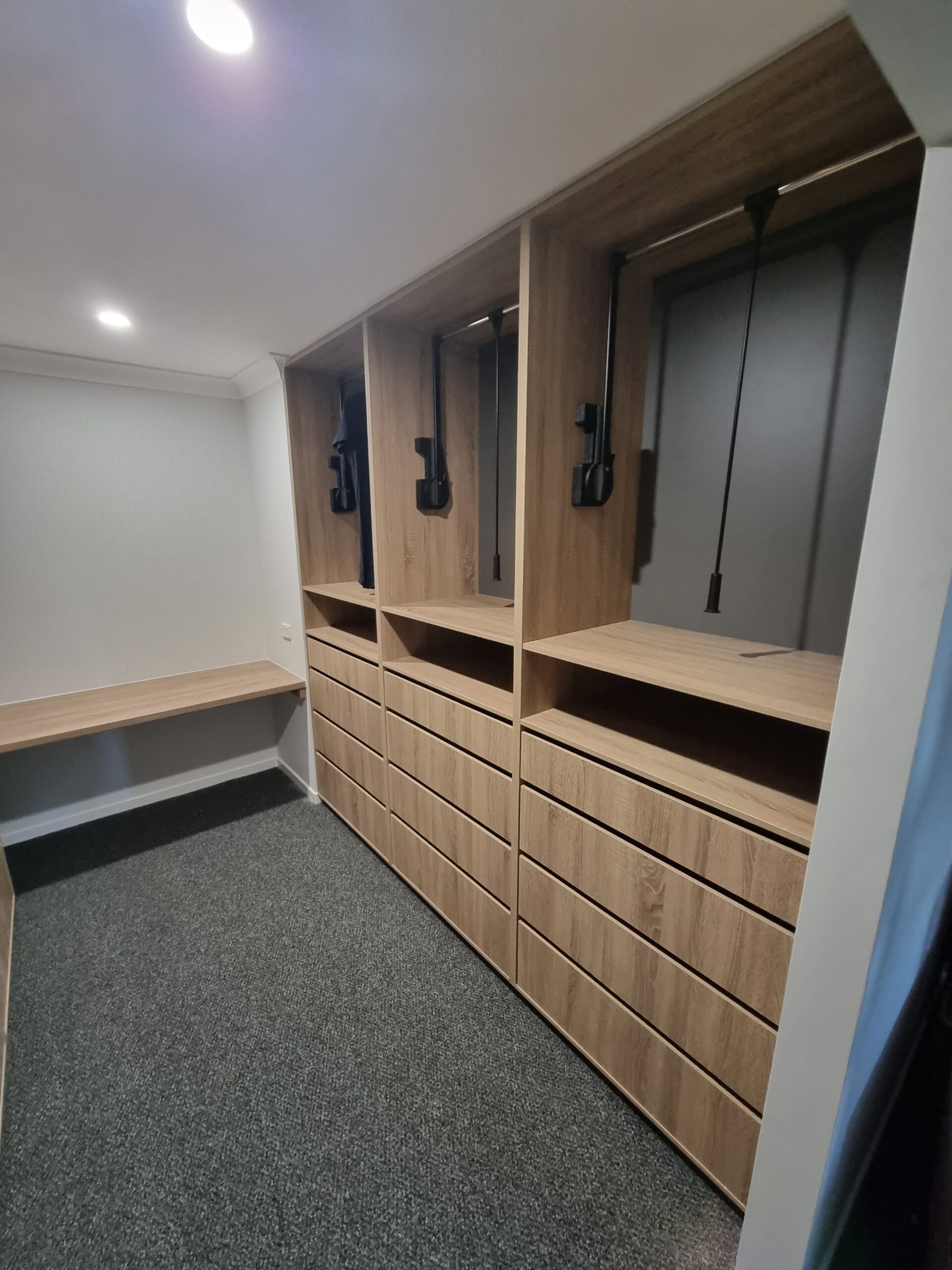
The Quick Answer: How to Design a Wall Wardrobe
Knowing how to design a wall wardrobe comes down to four fundamentals: accurate measurements, a clear understanding of your storage needs, the right internal layout, and finishes that suit your bedroom’s style. Get these four elements right, and you’ll end up with a built-in wardrobe that works beautifully for years to come.
Why Wall Wardrobes Are So Popular in Melbourne Homes
Melbourne’s housing stock is wonderfully diverse — from compact inner-city apartments in Fitzroy to generous suburban family homes in the northern growth corridors. What these properties share is a need for smart, space-efficient storage. A wall wardrobe makes use of an entire wall from floor to ceiling, reclaiming square footage that a freestanding unit simply can’t match.
Unlike a walk-in robe, a wall-to-wall built-in wardrobe suits bedrooms of almost any size. It keeps the room feeling open while hiding away everything from bulky winter coats to everyday essentials — a genuine win for Melbourne’s four-seasons-in-one-day climate.
Step 1 — Measure Your Space Accurately
Before you sketch a single design idea, measure your wall carefully. Take three height readings (left, centre, and right) because walls in older Melbourne homes are rarely perfectly level. Do the same for the depth of the recess or the floor space you’re working with.
Standard wardrobe depth sits between 550 mm and 600 mm — enough to hang clothes on a rail without them pressing against the door. If your space is shallower, you may need to consider folding doors or a sliding door system to avoid the doors swinging into the room.
Step 2 — Understand Your Storage Needs
This is where most people rush, and it’s a mistake. Think honestly about what you’re storing before you commit to any internal configuration. Consider:
- How many long-hang garments do you own (dresses, coats, suits)?
- How much double-hang space do you need for shirts, jackets, and folded trousers?
- Do you prefer shelving for folded clothes, or do you use a chest of drawers?
- Will you store shoes, handbags, or accessories inside the wardrobe?
- Do you need dedicated space for linen, blankets, or seasonal items?
Mapping out your actual wardrobe contents means your finished design genuinely serves your lifestyle rather than just looking good in a catalogue.
Step 3 — Plan Your Internal Layout
Once you know what goes inside, you can plan the internal configuration. A well-designed wall wardrobe typically combines a mix of hanging rails, fixed and adjustable shelves, and drawers. Adjustable shelving is especially useful because your storage needs will change over time.
For a shared bedroom, consider dividing the wardrobe into two distinct zones — one for each person. This keeps things orderly and avoids the morning scramble. If you’re designing for a child’s room, leave plenty of shelf space now and plan to add a hanging rail later as they grow.
If you’re looking for inspiration on proven layouts, the team at built-in wardrobes Craigieburn has worked across a wide range of Melbourne bedroom configurations and can walk you through what works in practice.
Step 4 — Choose Your Door Style
Your door choice has a significant impact on both the look and the function of your wall wardrobe. The two most common options for Melbourne homes are:
Sliding doors are ideal for tighter rooms where a swinging door would be awkward. They look sleek and come in a huge range of finishes — mirror, glass, timber veneer, or painted board. Mirrored sliding doors are particularly popular because they visually expand a smaller bedroom.
Hinged doors give you full access to the entire wardrobe opening at once, which makes it easier to see everything inside. They suit larger bedrooms and can be styled with decorative profiles for a more traditional or classic look.
Step 5 — Select Finishes and Hardware
Finishes tie your wardrobe into the rest of the bedroom. Polyurethane doors in a matte white or warm grey are enormously popular in contemporary Melbourne homes. Timber veneer and melamine with woodgrain prints suit more natural or Hamptons-inspired interiors.
Don’t overlook hardware — handles, soft-close hinges, and drawer runners all affect the day-to-day feel of the wardrobe. Soft-close mechanisms are well worth the investment, particularly in households with children. For a cohesive look throughout your home, it’s worth coordinating your wardrobe hardware with your kitchen cabinetry.
If you’re planning a broader renovation, custom wardrobes Reservoir offers design consultations that can help you align your wardrobe finishes with the rest of your joinery.
Ventilation and Lighting Inside Your Wardrobe
Two details that are easy to overlook — and genuinely important in Melbourne’s variable climate — are ventilation and internal lighting. Adequate airflow prevents moisture build-up, which can damage clothing and cause musty odours. If your wardrobe is enclosed, consider louvred panels or a small gap at the base of the doors.
LED strip lighting inside the wardrobe makes a real practical difference, especially in darker bedrooms. Motion-activated LED lights are a popular and affordable upgrade that eliminates fumbling around in the dark on an early Melbourne morning.
When to Call a Professional
If your wall spans more than three metres, involves an irregular ceiling height, requires structural fixing into masonry, or you want a fully custom internal layout, it’s time to bring in an expert cabinetmaker. DIY flat-pack systems have their place, but they rarely deliver the same fit, finish, or longevity as a professionally made and installed unit.
Perfect Kitchen & Robes specialises in custom-designed wall wardrobes across Melbourne’s northern suburbs, from Epping to Craigieburn and beyond. Whether you need a straightforward built-in or a fully bespoke fitted robe, the team can design, manufacture, and install a solution that fits your space exactly. Visit Perfect Kitchen & Robes to book your free in-home measure and quote today.
Conclusion
Learning how to design a wall wardrobe is a process — measure accurately, plan your storage honestly, choose the right door style, and select finishes that complement your bedroom. When you take the time to get each step right, the result is a wardrobe that genuinely improves your daily routine and adds lasting value to your Melbourne home.
Whether you’re tackling a master bedroom renovation or fitting out a new build, the principles above give you a solid foundation. And if you’d prefer expert guidance from start to finish, custom wardrobes Craigieburn is a great place to start exploring what’s possible for your space. Reach out to Perfect Kitchen & Robes today and take the first step toward a wardrobe that truly works for you.
Frequently Asked Questions
What is the ideal depth for a wall wardrobe?
The standard depth for a wall wardrobe is between 550 mm and 600 mm. This allows enough room to hang clothes on a rail comfortably without garments pressing against the door. If your available space is shallower, sliding or bi-fold doors can help maximise accessibility.
How do I decide between sliding and hinged wardrobe doors?
Choose sliding doors if your bedroom is compact or the wardrobe is positioned where a swinging door would obstruct movement. Opt for hinged doors if you want full, unobstructed access to the entire wardrobe at once and you have sufficient floor clearance in front of the unit.
Can I design a wall wardrobe myself, or do I need a professional?
Flat-pack wardrobe systems are a viable DIY option for straightforward, standard-sized spaces. However, for custom dimensions, non-standard ceiling heights, complex internal layouts, or premium finishes, a professional cabinetmaker will deliver a far superior and longer-lasting result.
What internal wardrobe features are most useful for Melbourne households?
A combination of long-hang and double-hang rails, adjustable shelving, and at least two to three drawers suits most Melbourne households. Given the city’s changeable seasons, dedicated storage for bulky winter items — such as a high shelf or a deep lower compartment — is also a practical addition.