
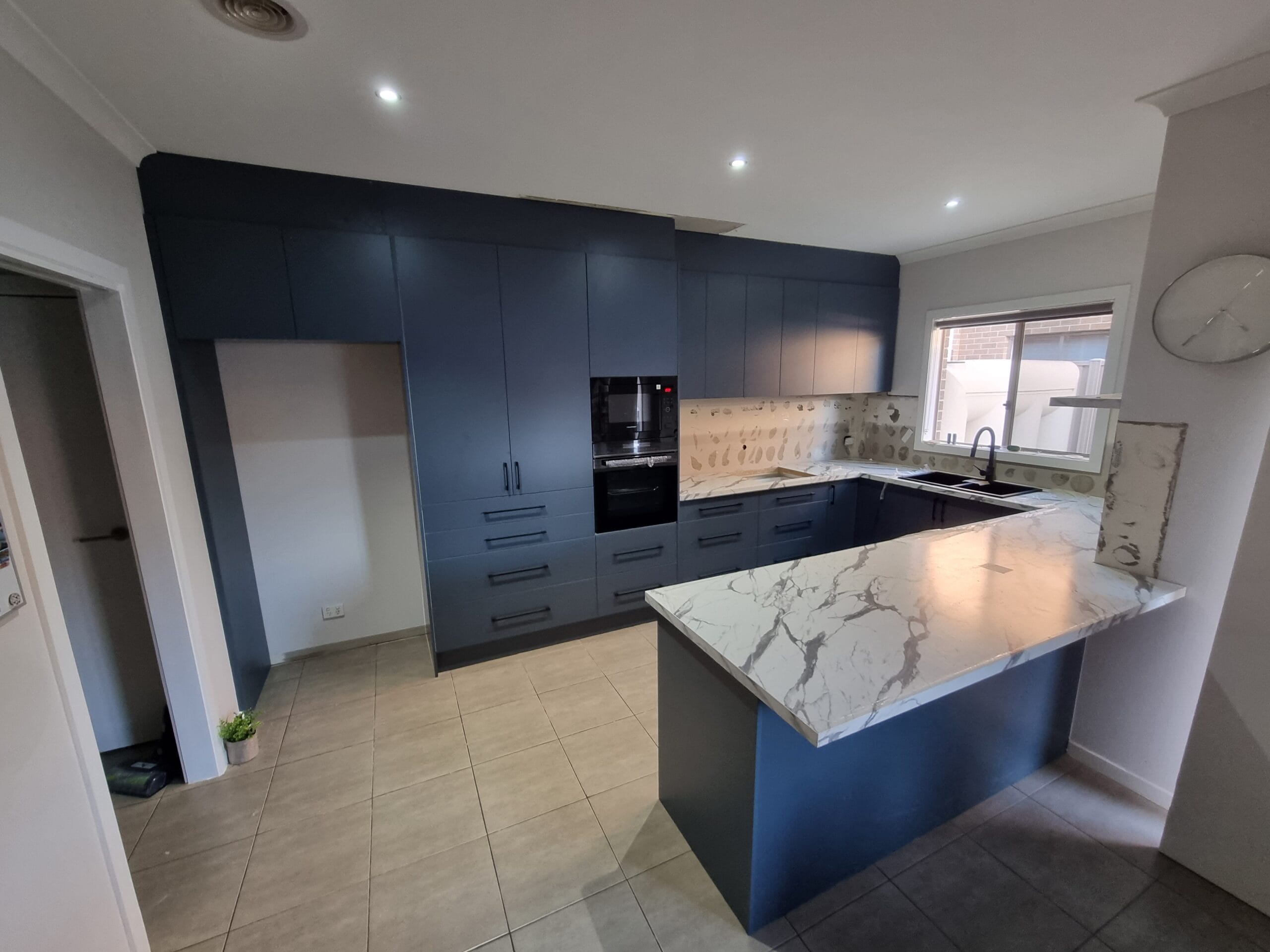
What Goes Into Making a Custom Kitchen Cabinet?
So you’re wondering how are custom kitchen cabinets made — and it’s a smarter question than most people realise before starting a renovation. In short, custom cabinets are designed to your exact measurements, built from chosen materials, and assembled by skilled cabinet makers to suit your specific kitchen layout and lifestyle needs.
Unlike flat-pack or semi-custom options, every component is crafted with your space in mind. That means no awkward gaps, no compromised storage, and a finished result that actually fits your home.
Step 1: Design Consultation and Precise Measurement
The process always begins with a detailed consultation. A cabinet maker will visit your Melbourne home to assess the kitchen space, noting wall angles, window positions, plumbing locations, and ceiling heights. Melbourne homes — particularly older builds in the northern suburbs — often have quirky layouts that make accurate measurement absolutely critical.
From these measurements, a detailed CAD (computer-aided design) drawing is produced. You’ll review door styles, finishes, hardware options, and internal configurations before a single piece of material is cut. This stage protects you from costly surprises down the track.
Step 2: Choosing Your Materials and Finishes
Material selection is where custom cabinetry truly separates itself from off-the-shelf alternatives. Here are the most common options Melbourne cabinet makers work with:
- Moisture-resistant MDF (Medium Density Fibreboard): A popular carcass material that machines cleanly and holds paint well.
- Melamine-faced particleboard: Cost-effective and durable for cabinet boxes, available in a wide range of colours and textures.
- Solid timber: Often used for door frames, drawers, and feature elements where warmth and character are priorities.
- Polyurethane and 2-pack finishes: High-gloss or matte coatings applied to MDF doors for a sleek, contemporary look.
- Veneer: Real timber sliced thin and bonded to a substrate — beautiful, but requires careful sealing and maintenance.
The choice of material affects durability, cost, and appearance. Your cabinet maker will guide you based on your budget, cooking habits, and the overall aesthetic you’re after.
How Are Custom Kitchen Cabinets Made in the Workshop?
Once materials are confirmed and the design is locked in, fabrication begins in the workshop. Sheets of board are cut to precise dimensions using a panel saw or CNC (computer numerical control) routing machine. CNC technology has become standard among quality Melbourne cabinet makers — it delivers consistent, accurate cuts that are essential for seamless assembly.
Cabinet carcasses (the box structure) are then drilled for shelf pins, hinges, and drawer runners using a line boring machine. Components are edge-banded — a thin strip of matching material is applied to exposed edges to create a clean, finished appearance and protect against moisture ingress.
Doors and drawer fronts are produced separately, whether routed from MDF, constructed as timber frame-and-panel doors, or cut from sheet material and finished with polyurethane. Hardware — including soft-close hinges, undermount drawer systems, and pull-out pantry mechanisms — is fitted with precision. If you’re also considering storage solutions beyond the kitchen, the same craftsmanship applies to cabinet makers in Craigieburn who handle wardrobes, laundries, and more.
Step 3: Quality Checking Before Delivery
Before your cabinets leave the workshop, a thorough quality check is carried out. Doors are test-fitted to confirm alignment. Drawer boxes are checked for smooth, level operation. Finishes are inspected under workshop lighting for any imperfections that need addressing.
This stage is non-negotiable for reputable cabinet makers. It saves significant time and frustration during installation — and it’s a hallmark of professional craftsmanship you should always ask about when getting quotes.
Step 4: Professional Installation in Your Home
Installation day is where everything comes together. Cabinet carcasses are fixed to wall studs and floor using appropriate fixings, levelled carefully with packers and adjustable legs, and scribed to fit against walls that may not be perfectly straight — a common reality in Melbourne’s established homes.
Benchtops are templated and cut to fit, then secured to the carcasses. Doors and drawer fronts are hung and adjusted for perfect alignment. Finally, handles, knobs, and any internal accessories — pull-out bins, spice racks, integrated lighting — are installed and tested.
The result is a kitchen that looks and functions exactly as designed. If you’re renovating across multiple rooms, experienced tradespeople like those at cabinet makers in Epping can coordinate cabinetry for kitchens, bathrooms, and living areas in a single project.
What Makes Custom Cabinets Worth the Investment?
Custom cabinetry costs more upfront than flat-pack, but Melbourne homeowners consistently find the long-term value compelling. You get better use of every centimetre of space, higher quality materials and hardware, and a finish tailored to your home’s style. Resale value is also a genuine consideration — a well-designed kitchen is one of the strongest selling points in any Melbourne property.
Beyond kitchens, the same process and quality standards apply to built-in storage throughout your home. Explore options for cabinet makers in Thomastown if you’re looking to extend the same quality craftsmanship to other areas of your home.
When to Call a Professional
If you’re planning a kitchen renovation in Melbourne — whether it’s a full redesign or a cabinet refresh — this is absolutely the right time to speak with an experienced cabinet maker. DIY cabinetry can lead to costly mistakes, particularly when dealing with uneven walls, plumbing constraints, or complex corner configurations.
Perfect Kitchen & Robes specialises in designing and building fully custom kitchen cabinets for Melbourne homeowners, with a process that takes you from initial consultation through to a beautifully finished installation. Contact Perfect Kitchen & Robes today to book your free in-home measure and design consultation.
Conclusion
Understanding how are custom kitchen cabinets made helps you make smarter decisions about your renovation. From precise measurement and material selection through to CNC fabrication, quality checking, and professional installation — every step matters. The result is cabinetry built specifically for your home, your lifestyle, and your budget.
Don’t settle for a kitchen that almost fits. Reach out to Perfect Kitchen & Robes and discover what truly custom cabinetry can do for your Melbourne home in 2026.
Frequently Asked Questions
How long does it take to have custom kitchen cabinets made and installed in Melbourne?
The timeline varies depending on the complexity of the design and the cabinet maker’s current workload, but most custom kitchen projects in Melbourne take between four and eight weeks from final design approval to completed installation. More complex kitchens with specialty finishes or imported hardware may take longer.
What is the difference between custom and semi-custom kitchen cabinets?
Semi-custom cabinets are built in standard sizes with some modification options — you choose from set configurations. Fully custom cabinets are built from scratch to your exact dimensions and specifications, giving you complete control over size, layout, materials, and internal fittings. Custom is the better choice for non-standard spaces or when you want a truly unique result.
Are custom kitchen cabinets built to any Australian standards?
Yes. Reputable Australian cabinet makers work to AS/NZS 4386, the Australian and New Zealand standard for domestic kitchen furniture. This standard covers performance requirements for cabinets, drawers, and hardware — ensuring your cabinetry is built to last and safe for everyday use.
Can custom kitchen cabinets be made to suit an older Melbourne home with uneven walls?
Absolutely — this is actually one of the main advantages of going custom. Experienced cabinet makers scribe cabinet panels and pelmets to follow irregular wall profiles, ensuring a neat, seamless fit even in period homes where walls are rarely perfectly straight or square. It’s a skill that flat-pack solutions simply cannot replicate. For more about what we do, visit our homepage.