
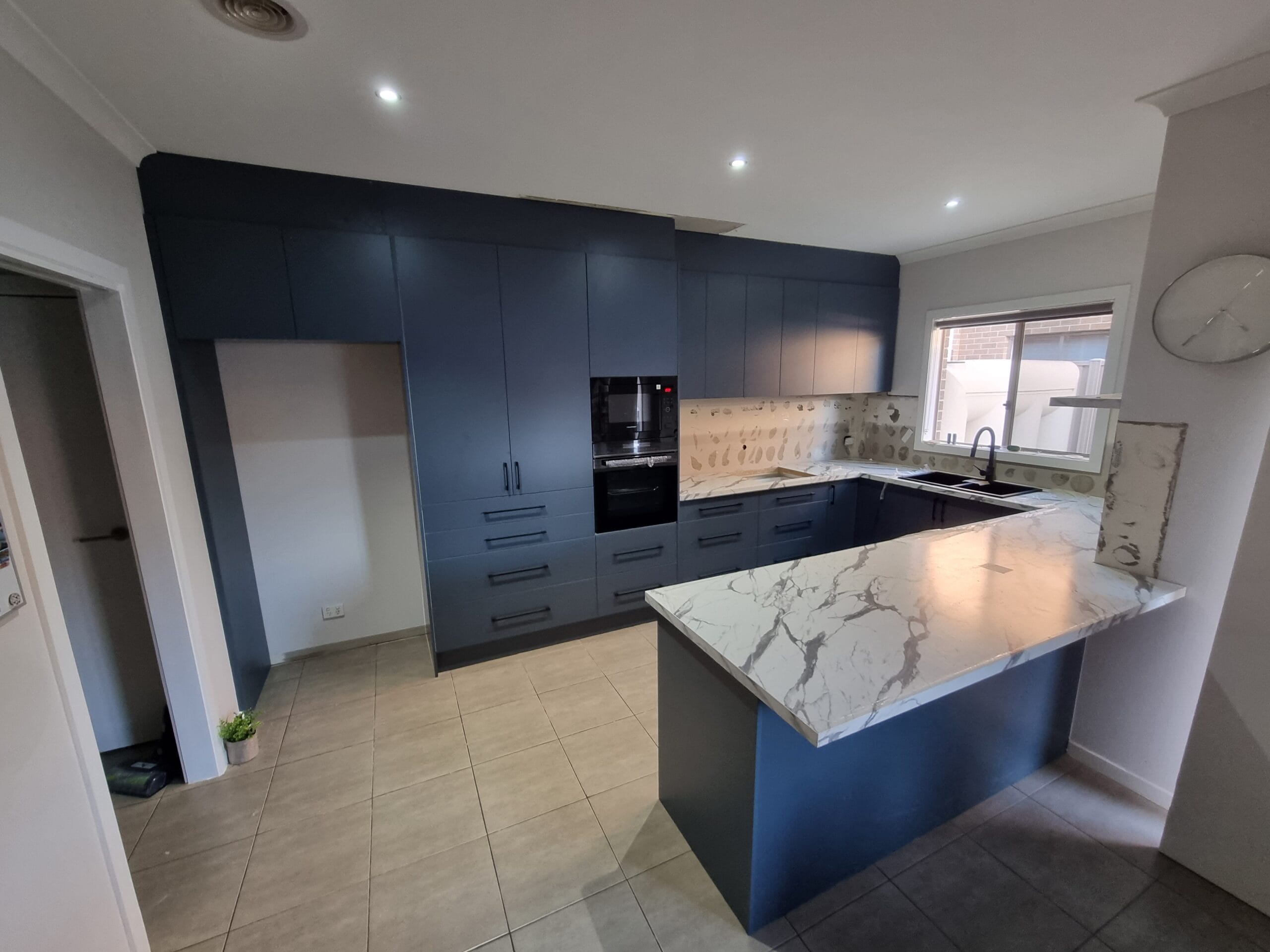
What Is Kitchen Cabinet Refacing?
Understanding how does kitchen cabinet refacing work is simpler than most Melbourne homeowners expect. In short, refacing replaces the visible surfaces of your existing cabinets — doors, drawer fronts, and exposed panels — while keeping the original cabinet boxes (carcasses) in place. It delivers a brand-new kitchen aesthetic at a fraction of the cost and disruption of a full renovation.
If your kitchen layout works well but the look feels dated, refacing is one of the smartest upgrades you can make. It’s especially popular in Melbourne’s established suburbs, where homes built in the 1980s and 1990s often have solid cabinet structures that are perfectly worth keeping.
How Does Kitchen Cabinet Refacing Work? The Step-by-Step Process
The refacing process follows a clear, logical sequence. A skilled cabinetmaker will assess your existing cabinetry first, checking that the carcasses are structurally sound and free from water damage or warping — both common issues in Melbourne kitchens near sinks or dishwashers.
- Initial assessment: The tradie inspects cabinet boxes for damage, checks alignment, and measures all surfaces accurately.
- Door and drawer front removal: All existing doors, drawer fronts, and hinges are carefully removed and set aside for disposal or recycling.
- Surface preparation: Exposed cabinet frames and end panels are cleaned, sanded, and primed to ensure the new veneer or laminate bonds correctly.
- Veneer or laminate application: A new material — typically a timber veneer, thermofoil, or high-pressure laminate (HPL) — is precision-cut and adhered to the cabinet frames and visible side panels.
- New door and drawer front installation: Custom-made doors and drawer fronts in your chosen style and finish are fitted to the refaced frames using new European-style concealed hinges.
- Hardware fitting: New handles, knobs, and soft-close mechanisms are installed to complete the transformation.
- Final inspection and clean-up: Every door is adjusted for perfect alignment, and the kitchen is left clean and ready to use — often within just two to three days.
The result is a kitchen that looks entirely new without the mess, cost, or weeks of downtime associated with a full gut renovation.
Materials Used in Cabinet Refacing
The material you choose for your refacing project has a significant impact on the final look, durability, and cost. In Melbourne’s climate — with its notorious four-seasons-in-one-day temperature swings — material selection matters more than many people realise.
Timber veneer offers a warm, natural aesthetic and suits period homes beautifully. Thermofoil (a vinyl-wrapped MDF product) is moisture-resistant and easy to clean, making it ideal for busy family kitchens. High-pressure laminate (HPL) is extremely durable and scratch-resistant, a popular choice for modern and contemporary kitchen styles. Two-pack polyurethane finishes are another premium option, delivering a smooth, glossy surface with excellent longevity.
Cabinet Refacing vs. Full Kitchen Renovation
One of the most common questions Melbourne homeowners ask is whether refacing is worth it compared to a complete kitchen renovation. The honest answer depends on the condition of your existing cabinet boxes and your budget.
Refacing typically costs 40–60% less than a full replacement. It also generates far less waste, which aligns with growing sustainability awareness among Melbourne residents. If your cabinet layout is functional and the carcasses are in good condition, refacing is almost always the more sensible choice. If, however, your boxes are water-damaged, mouldy, or poorly positioned, a full renovation may be the better long-term investment.
For homeowners also considering storage upgrades elsewhere in the home, the expert cabinet makers at our Craigieburn location can help you assess the full scope of your project and recommend the most cost-effective approach.
Is Cabinet Refacing a DIY Job?
Some handy homeowners do attempt basic refacing tasks, such as replacing handles or painting doors. However, the core refacing process — particularly veneer application and door fitting — requires precision tools, experience with adhesives, and an eye for perfect alignment. Poorly applied veneer can bubble, peel, or look uneven, which devalues your kitchen rather than improving it.
Cutting and fitting new doors to match your existing cabinet openings is also more technically demanding than it appears. Unless you have genuine cabinetmaking experience, this is a job best left to a qualified professional.
When to Call a Professional
If your kitchen looks tired, your cabinet doors are warped or delaminating, or you simply want a fresh aesthetic without the upheaval of a full renovation, it’s time to speak with a professional cabinetmaker. A qualified tradesperson will assess your existing cabinetry honestly, recommend the right materials for your lifestyle, and deliver a finish that lasts.
Perfect Kitchen & Robes serves homeowners across Melbourne’s northern suburbs and beyond, offering expert cabinet refacing and full kitchen makeover solutions. Whether you’re in Craigieburn, Epping, Reservoir, or Thomastown, our team can provide a no-obligation measure and quote. Explore our cabinet making services in Epping or visit our Perfect Kitchen & Robes homepage to learn more about what we offer. Call us today to book your consultation.
Conclusion
So, how does kitchen cabinet refacing work? It’s a streamlined, cost-effective process that replaces the visible surfaces of your cabinetry — doors, drawer fronts, and panels — while retaining the existing cabinet structure. For Melbourne homeowners in 2026, it represents one of the best-value kitchen upgrades available, delivering a dramatic visual transformation with minimal disruption and waste.
The key takeaways: refacing suits kitchens with sound cabinet boxes, costs significantly less than full replacement, and should be carried out by a qualified cabinetmaker for the best results. If you’re ready to fall back in love with your kitchen, reach out to Perfect Kitchen & Robes and let’s make it happen.
Frequently Asked Questions
How long does kitchen cabinet refacing take?
Most kitchen cabinet refacing projects in Melbourne are completed within two to four days, depending on the size of the kitchen and the materials chosen. Unlike a full renovation, there’s no need to vacate your home or go without a functional kitchen for weeks.
How long will refaced cabinets last?
When professionally installed using quality materials such as high-pressure laminate or two-pack polyurethane, refaced cabinets can last 15–20 years or more. The longevity depends largely on the material selected and how well the cabinets are maintained — regular cleaning and avoiding excess moisture will extend their life significantly.
Can all cabinet types be refaced?
Most timber-framed and MDF cabinet boxes in good structural condition can be refaced. However, cabinets that are water-damaged, warped, or made from very thin or flimsy materials may not be suitable candidates. A professional assessment is the best way to determine whether refacing is viable for your specific kitchen.
Does cabinet refacing add value to a Melbourne home?
Yes — a refreshed, modern kitchen is one of the top factors that influence buyer appeal and property value in Melbourne’s competitive real estate market. Cabinet refacing offers an excellent return on investment, particularly in established homes where the kitchen is functional but visually dated.